
Bahaar – Vid. Ashwini Bhide-Deshpande
– by Sampada Mudgalkar Jatkar
12th April 2026
At the beginning of this year, when I heard we (GMV NA) would be hosting Ashwini Bhide-Deshpande for our annual flagship event Bahaar, I felt a quiet sense of excitement. I have long been in awe of her, an artist who has excelled not only in music but also in academics with equal distinction. I found myself wondering what she would be like in person, and how that depth would translate on stage.
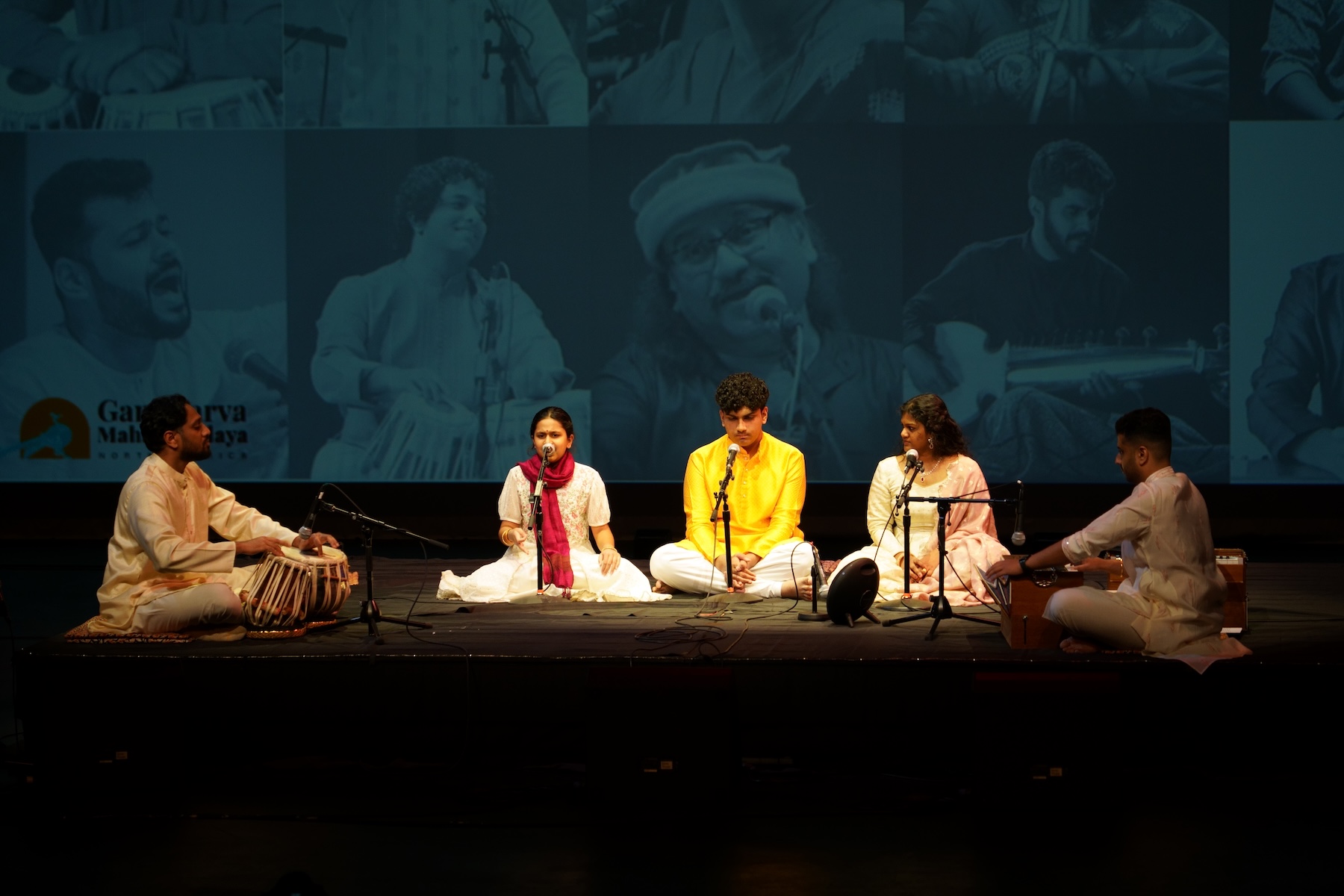
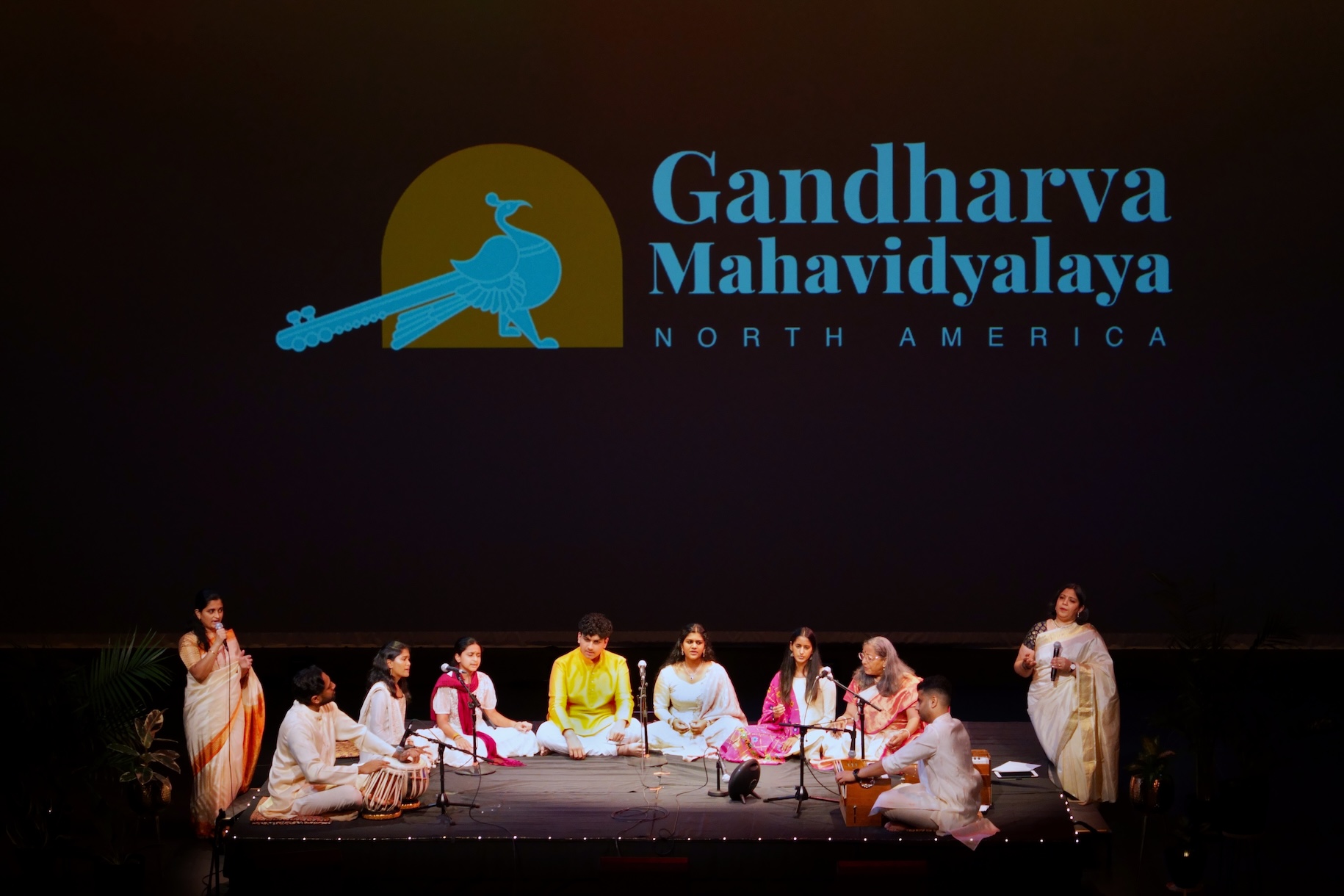
Bahaar, now in its third year, has steadily grown into a cornerstone for our community, and this year’s house-full auditorium spoke volumes about the support and love for Indian classical music. True to tradition, the evening opened with “Jay Jagdish Hare,” a composition by Vishnu Digambar Paluskar. While this prayer has always been a defining feature of our concerts, this year it was presented live by the winners of the 2025 vocal competition – a meaningful evolution from the recorded versions of previous years. This was followed by performances from winners across categories, each presenting a raag of their choice with sincerity and promise.
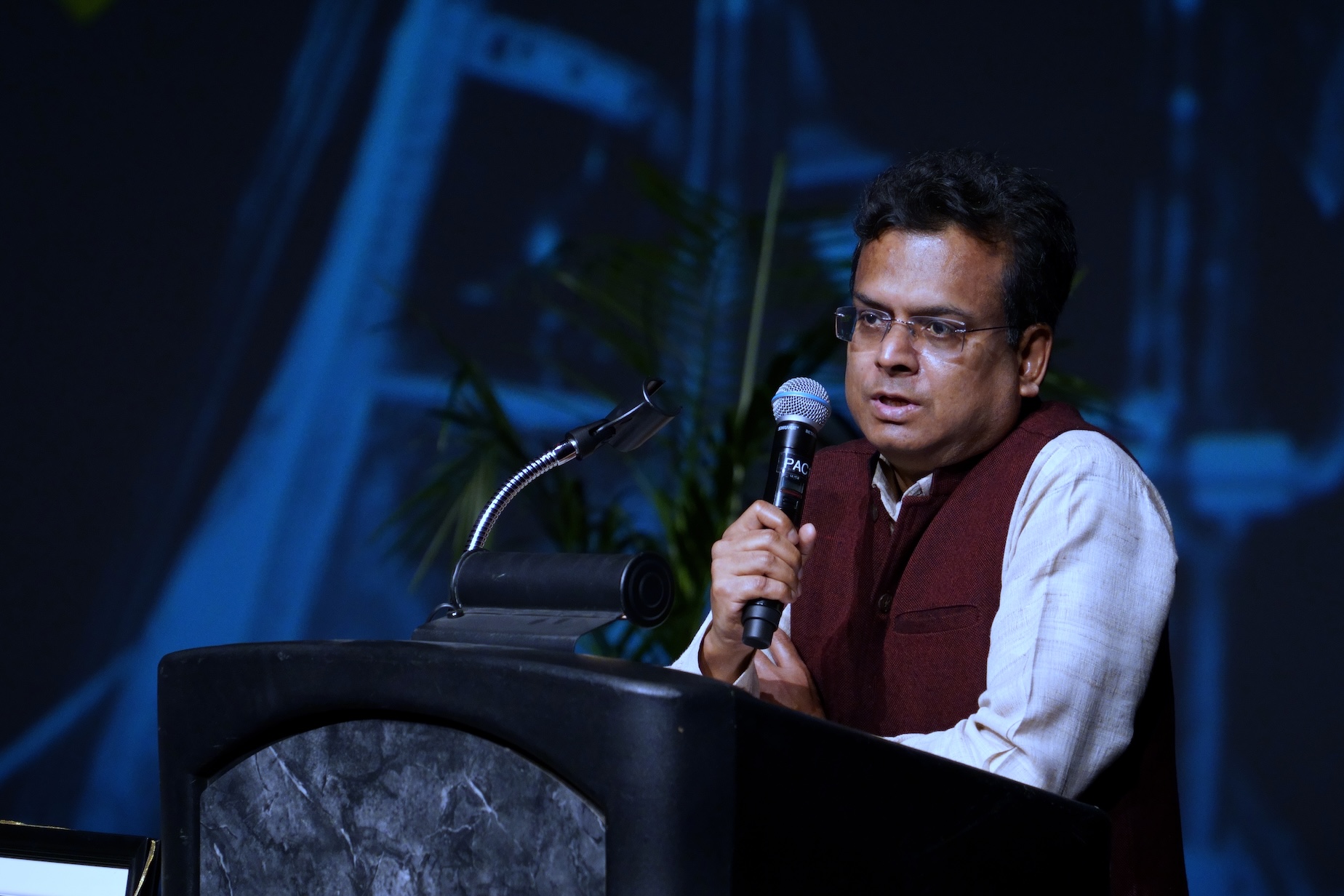
Their felicitation by Ashwini tai was a moment of fulfillment – not just for the performers, but for everyone who has witnessed their journey. When she walked onto the stage for this, the audience rose in a spontaneous standing ovation, even before a single note had been sung. It was a powerful testament to the respect and credibility she commands. Shortly after, the Consul General of India, present as a chief guest, remarked that seeing such young talent gave him hope that this art form rests in capable hands – a sentiment that resonated deeply.
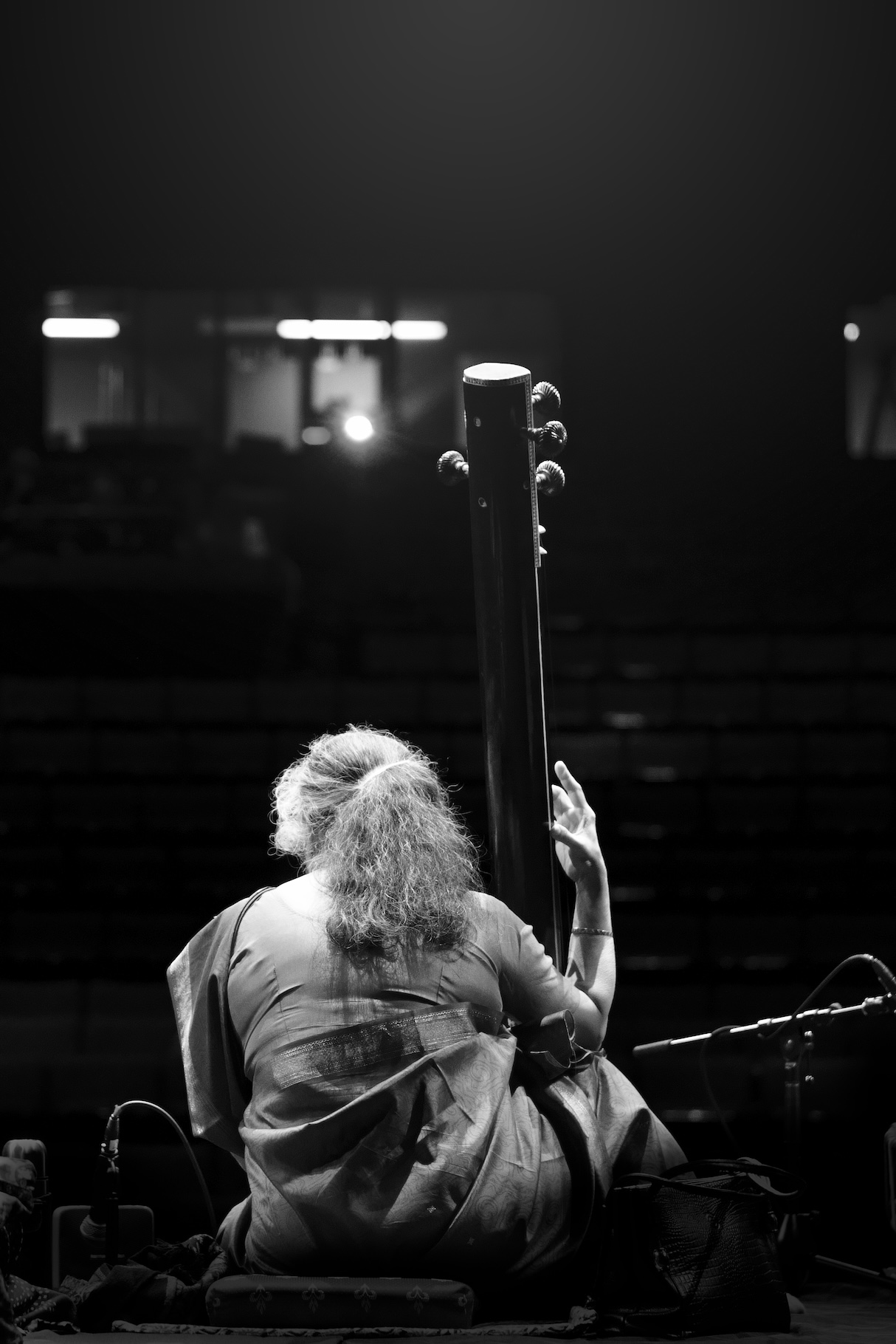
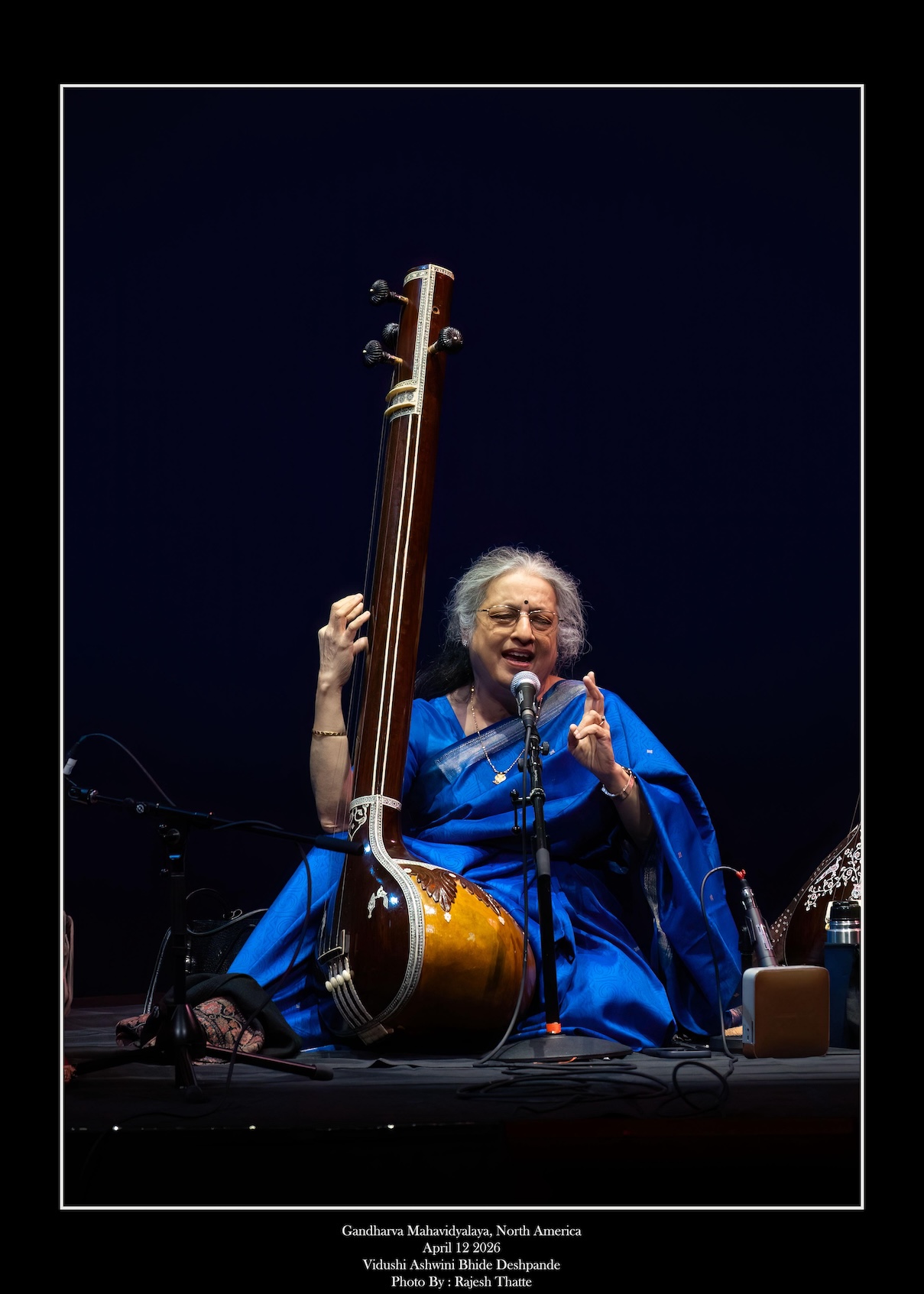
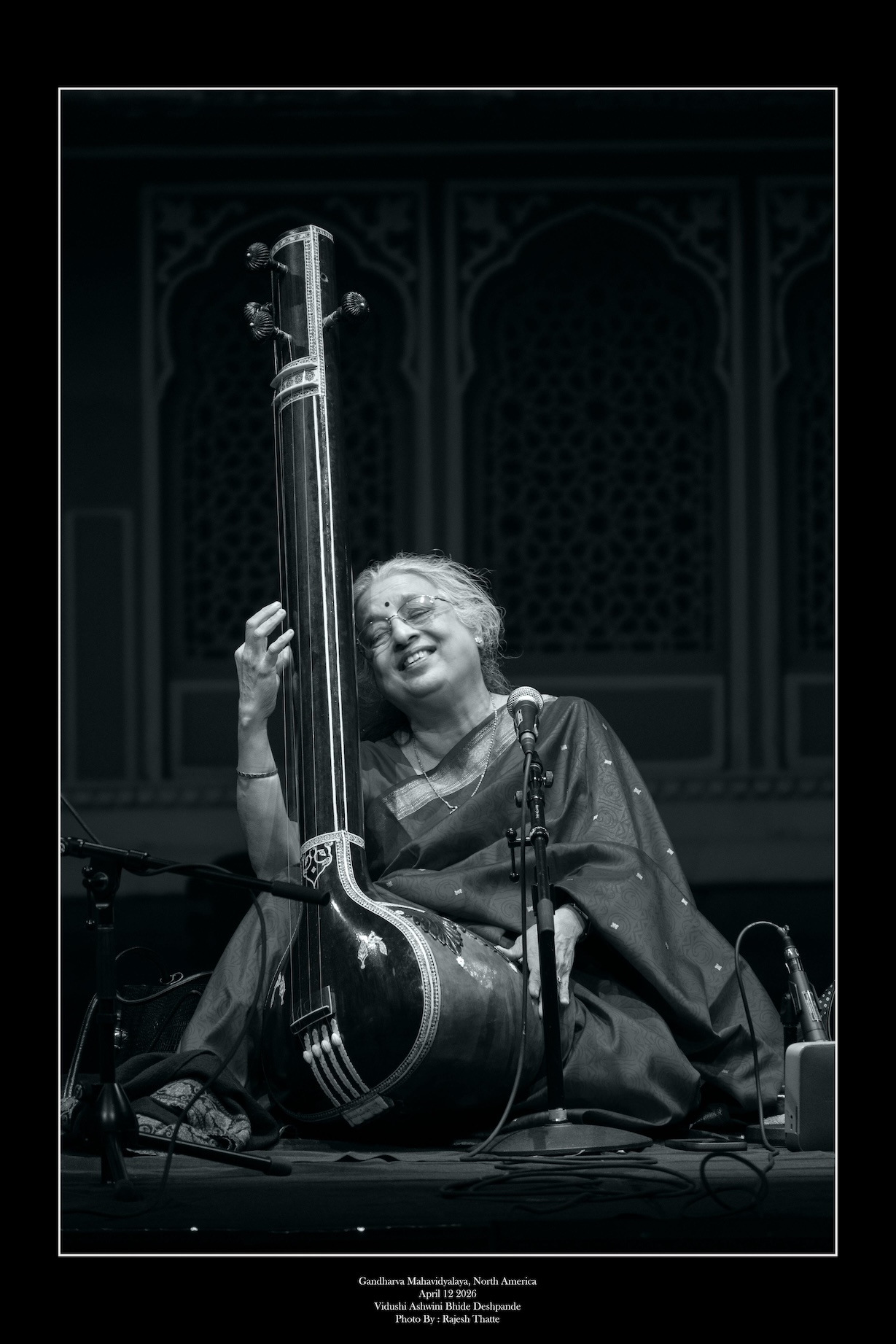
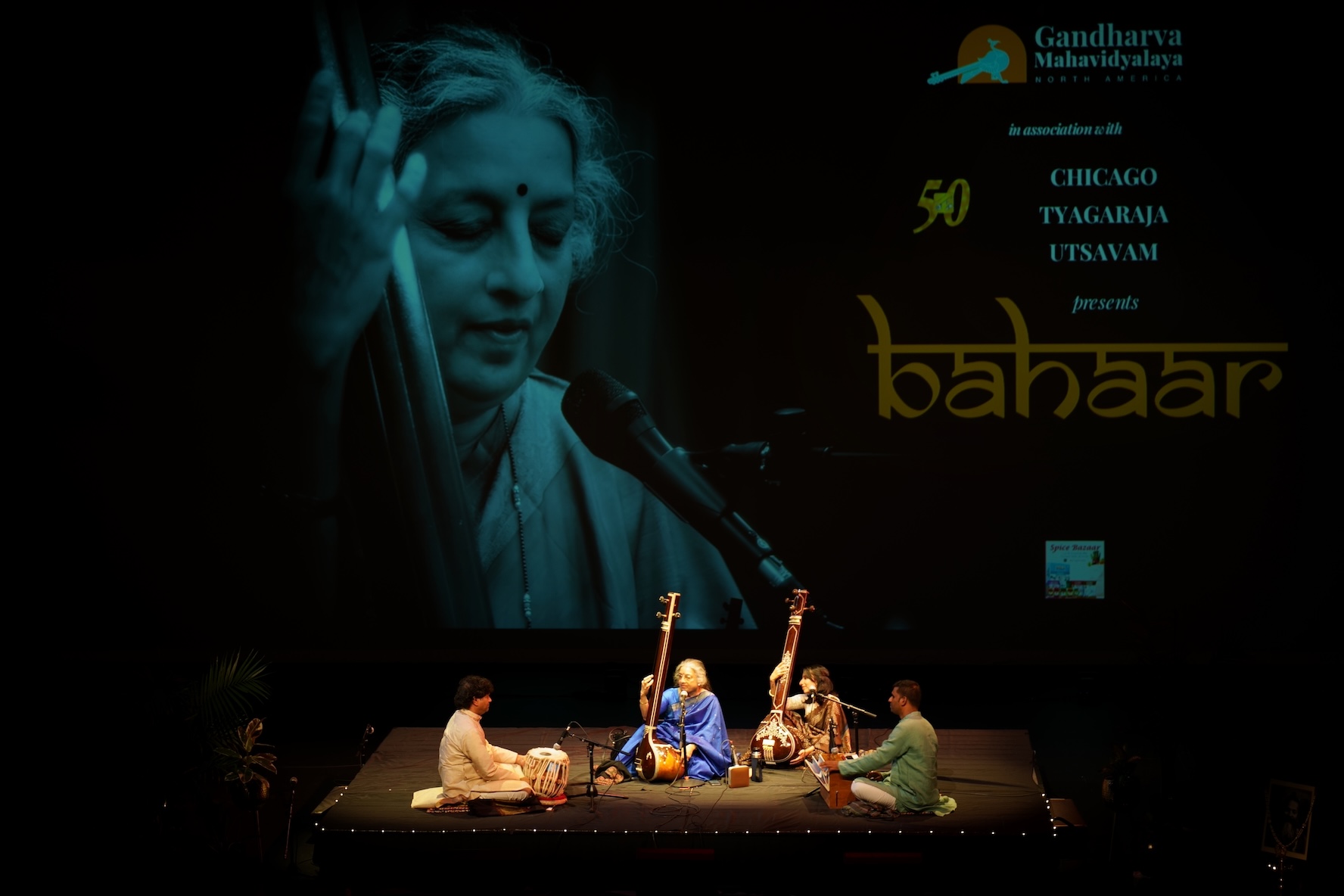
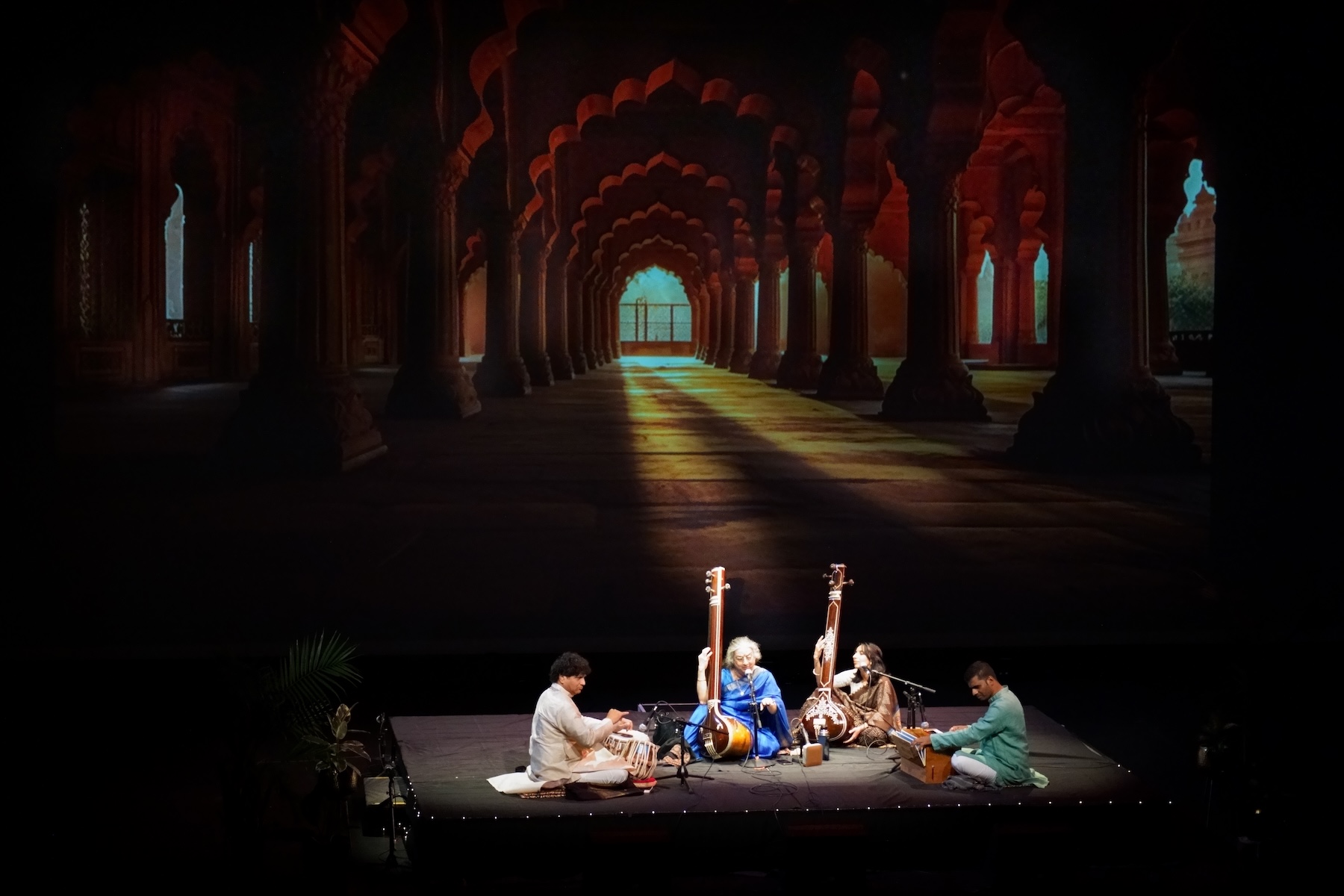
The emotional tone of the evening, however, had already been shaped earlier that day with the passing of the legendary Asha Bhosle. A sense of collective loss lingered in the air. Acknowledging this, Ashwini tai chose to dedicate her performance to Asha ji and began with Raag Marwa. The introspective and restless character of the raga made for a deeply fitting tribute. Her exploration was immersive, and for me, a
particularly striking moment was the use of “Shuddha Madhyam” in a composition set to Rupak taal – a nuanced and unexpected touch that seemed to resonate profoundly with the audience.
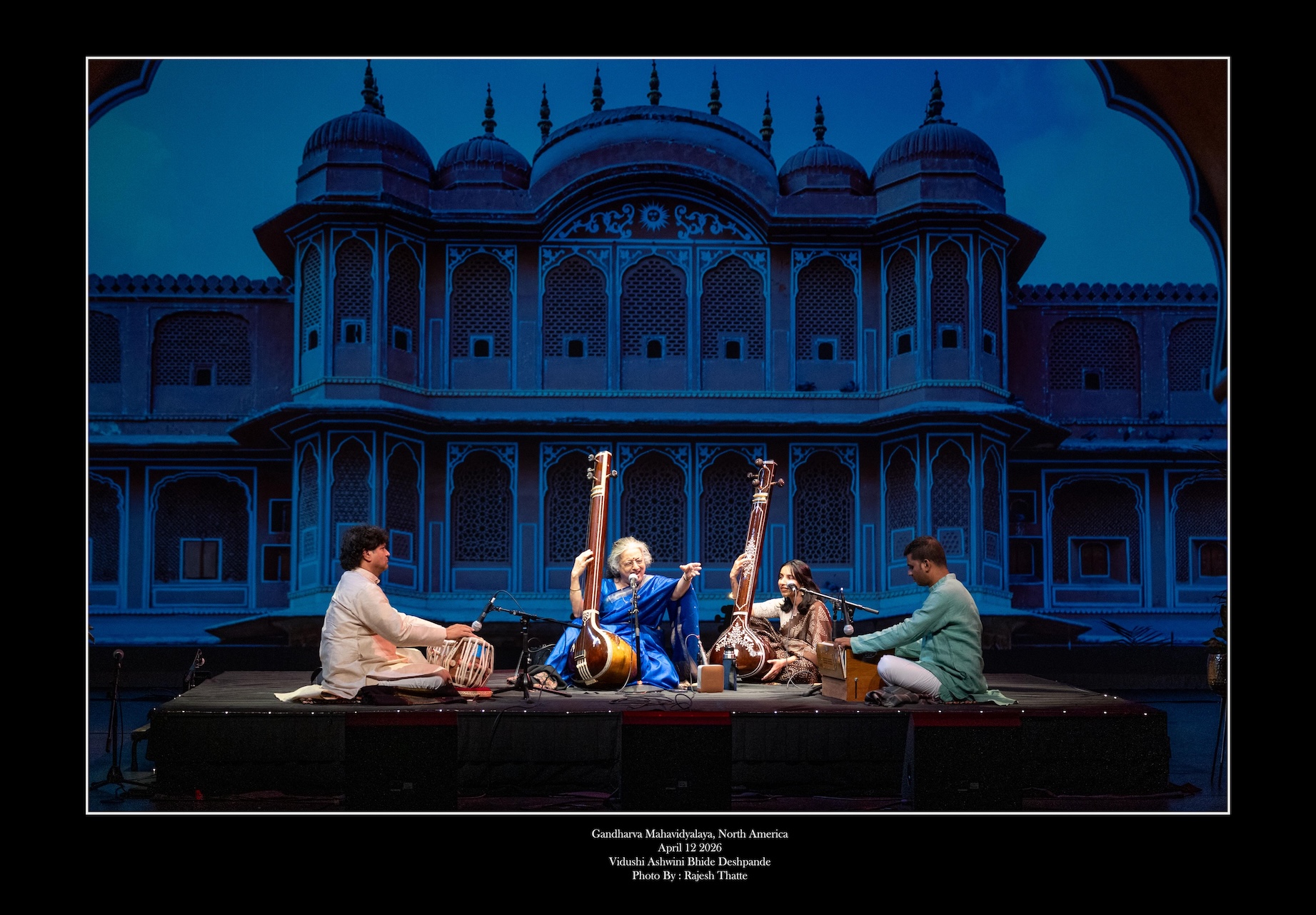
She followed this with Basanti Kedar, a Jaipur-Atrauli gharana specialty, presenting a composition by Mogubai Kurdikar with characteristic depth and clarity. The concert then moved into Bageshri – a rare addition, as she noted that this was the first time in her North American performances that she was presenting a third raga. The audience’s eager consent to this extension reflected the rapport she had built over the course of the evening. She concluded with a Meera bhajan composed by Shobha Gurtu, rendered in a Rajasthani style that brought a gentle, emotive close to the concert. She was supported throughout by an exceptional ensemble, Sanjay Deshpande on tabla and Siddhesh Bicholkar on harmonium – whose sensitive and responsive
accompaniment elevated the performance at every step. Alongside them, her student Avanti Patel on tanpura provided steady tonal support and thoughtful vocal reinforcement.
Bahaar 2026 was more than a concert. It was a confluence of tradition, tribute, and transition – honoring the past, celebrating the present, and nurturing the future of Indian classical music.
Artist Bio:
Vidushi Ashwini Bhide-Deshpande
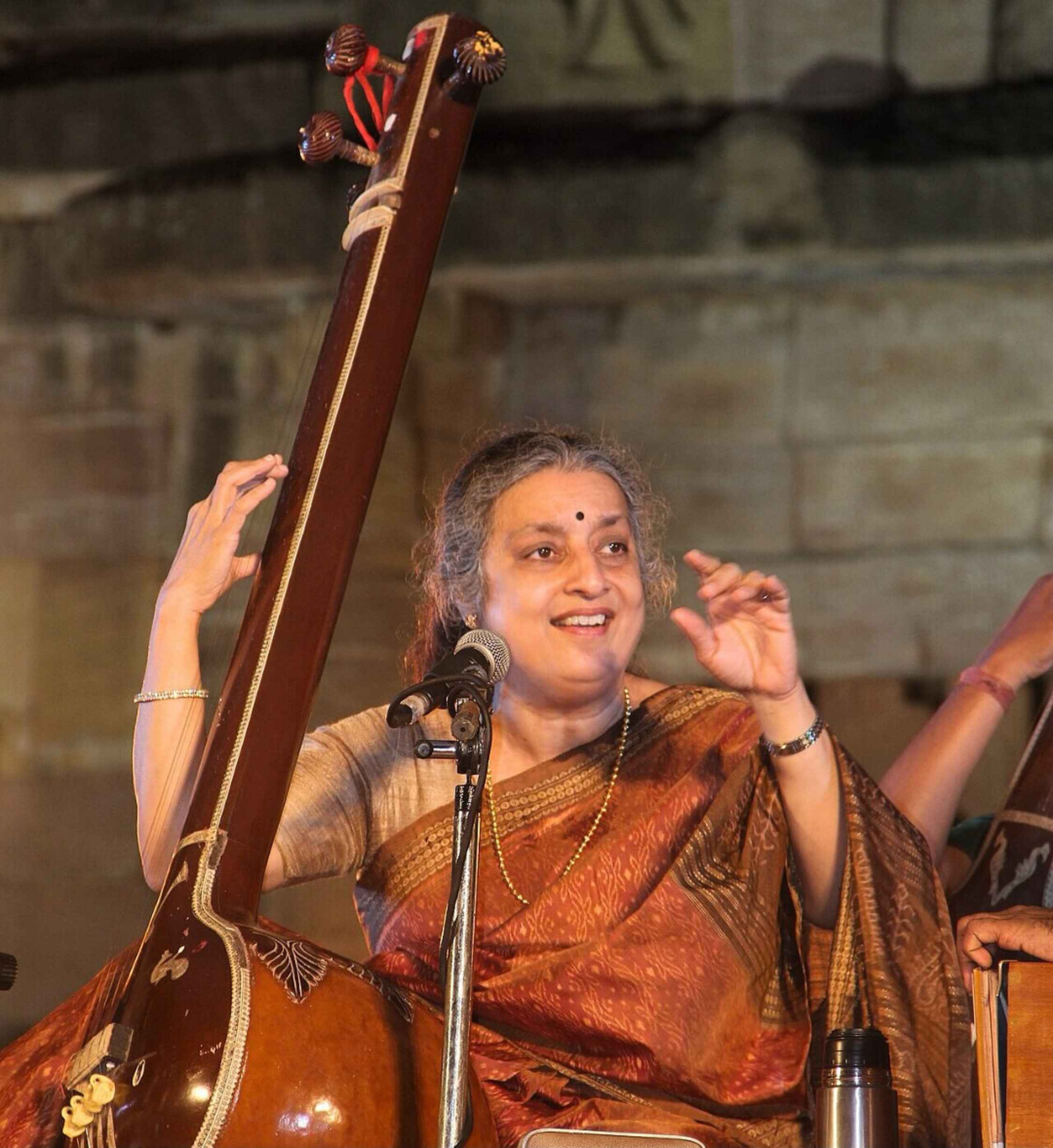
Vidushi Ashwini Deshpande is a Hindustani classical singer in the famous “Jaipur-Atrauli” Khayal singing tradition. She was born into a musical family and received the “Sangeet Visharad” of the “Akhil Bharatiya Gandharva Mahavidyalaya” and the President’s Gold Medal in All India Radio Music Competition at the age of sixteen. After imbibing the foundations of Hindustani classical music from her first guru, the late Pt. Narayanrao Datar, she started learning the stylised “Jaipur-Atrauli gayaki” under the guidance of her mother, mentor and guru the late Smt. Manik Bhide. Later, the senior artist and guru of the Gharana, the late Pt. Ratnakar Pai provided her invaluable guidance on the rare and complex ragas of the Gharana. Along with classical Khayal, semi classical genres like thumri-dadra, devotional bhajans/marathi abhangs and Sanskrit hymns/stotras effortlessly blend in her repertoire.
She has performed at various prestigious music festivals within and outside the country and has received acclaim from critics and music lovers all over the world as a vocalist who presents an unmatched blend of raga composition-architecture, vitality, emotion and tonal sweetness, while staying true to the tradition and grammar of the raga. Contributing to the tradition of Khayal, she published a book (along with a CD) of self-composed bandishes “Raag Rachananjali” in October 2004. “Raag Rachananjali 2” was published in October 2010. Launched in 2023, her YouTube channel – “Batiya Daurawat” is popular among classical music audiences. Her first recording album was released by HMV in 1985, followed by albums under various banners, including Rhythm House, Times Music, Sony Music, Music Today, Navras Records, and Universal Music.
She is a “Top Grade” artist of All India Radio and Doordarshan and has participated in many national programmes of All India Radio-Doordarshan. She has contributed to the enlightenment of lay listeners in India and abroad through lectures and demonstrations on Hindustani classical music in various schools, colleges and music conferences on a regular basis. As a teacher she has guided many disciples; who are now successful concert artists themselves.
Ashwiniji has received several honours and awards for her contribution to Indian classical vocal music, some of them: 2025 “Padma Shri”, 2020 DLitt (Honoris Causa) conferred by ITM University, Gwalior 2016, Madhya Pradesh Government’s “Rashtriya Kalidas Samman”, 2014 Sangeet Natak Akademi Award 2013, Bangalore Kidney Foundation’s “Pandit Mallikarjun Mansur Award” ,2011 Government of Maharashtra’s
“Sanskritic Puraskar” 2011, the first “Ganatapaswini Mogubai Kurdikar” Award 2010, Sahyadri Doordarshan “Sangeet Ratna” Award 2005, Government of Madhya Pradesh’s “Rashtriya Kumar Gandharva Samman” – the first female Hindustani singer to receive this award, 2005 “Pandit Jasraj Gaurav Puraskar” on the occasion of Pandit Jasraj’s 75th birthday.
She has chosen music as her first love and career after completing a doctorate (PhD) in Biochemistry at the Bhabha Atomic Research Centre/University of Mumbai.
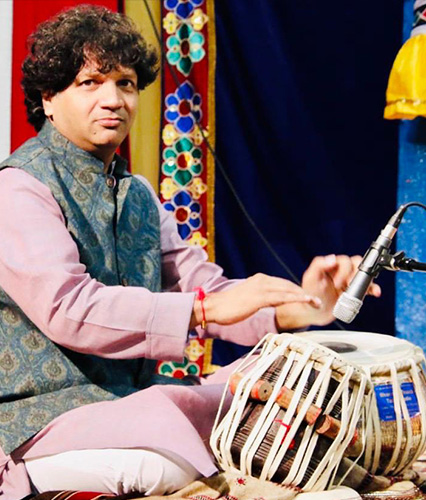
Sanjay Deshpande
Sanjay Deshpande is a talented Tabla Player based in Pune, INDIA. He was born in a music loving family and was introduced to the art of playing Tabla under Late Pt. Sabade at Pune Bharat Gayan Samaj. Later he took Taleem (lessons) from the renowned Tabla player Pt. Suresh Talwalkar of Delhi-Farookabad Gharana, in a Guru Shishya Parampara .He also had the privilege of understanding the beauty of Punjab Gharana under the guidance of world renowned Tabla maestro Ustad. Alla Rakha Khan Saheb and Pt.Yogesh Samsi. At present he is taking Taleem from Pt. Vivek Joshi.
Sanjay is recipient of the coveted “Ahmedjaan Thirakwaa Scholarship” for Solo Performance. He has accompanied renowned artists like Smt. Vasundhara Komkali, Pt. Ulhas Kashalkar, Pt. Smt. Malini Rajurkar, Pt. Jasraj, Dr. Prabha Atre, Pt. Dinkar Kaikini, Dr. Ashwini Bhide-Deshpande, Smt. Veena Sahastrabudhe and many such great artists.
He has performed in major conferences such as Sawai Gandharwa Music Festival Pune, Paluskar Smarak Conference, Shankarlal Samaroha in New Delhi, I.T.C. Sangeet Sammelan, Dowerlane Conference, Kolkata.
Sanjay has performed abroad in Countries like U.S.A, U.K, U.A.E, Canada, Australia,
Switzerland, Russia, Belgim, Holland, Qatar, Israel, South Korea etc. He has also
participated in the “World Vocal Festival” in Sweden.
He is empanelled as GURU at the Lalit Kala Kendra, University of Pune and Bharati
Vidyapeeth Pune. He has number of recordings released. His fusion album “Wind
From Ayuta” with Korean musicians won the Best album award of the year – 2002 in
South Korea.
Siddhesh Bicholkar
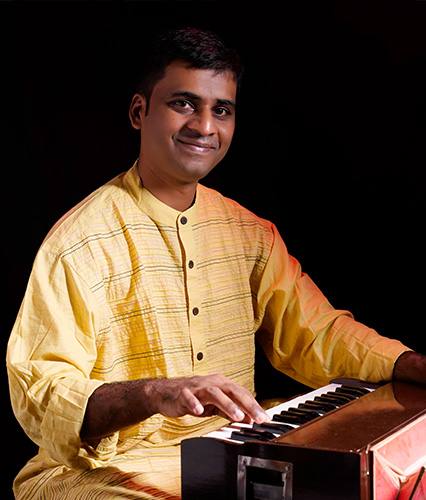
Having imbibed primary lessons in music since childhood, Siddhesh has been privileged to receive guidance from his first Guru, Shri Sharad Mathkar in Goa and later, placed under the tutelage of Pt. Tulsidas Borkar, renowned Harmonium exponent and Guru.
The difficult and lesser known art of Jaltarang was taken up by Siddhesh with inspiration from Shri Sharad Mathkar, who personally crafted his first set of Jaltarang apparatus.
Siddhesh gained valuable knowledge about instrumental recitals and depths of classical music from Pt. Tulsidas Borkar, enabling Siddhesh to present Jaltarang recitals, a very rare occurrence in Indian classical music.
He has been the recipient of many eminent music scholarships including accolades by the Govt. of India and its H.R.D. Ministry and many other awards to add to his long list of achievements. He is presently employed as a classical music teacher at Sharda Sangeet Vidyalaya, Mumbai.